How To Keep AI Stealing Your Job Or Destroying Your Business
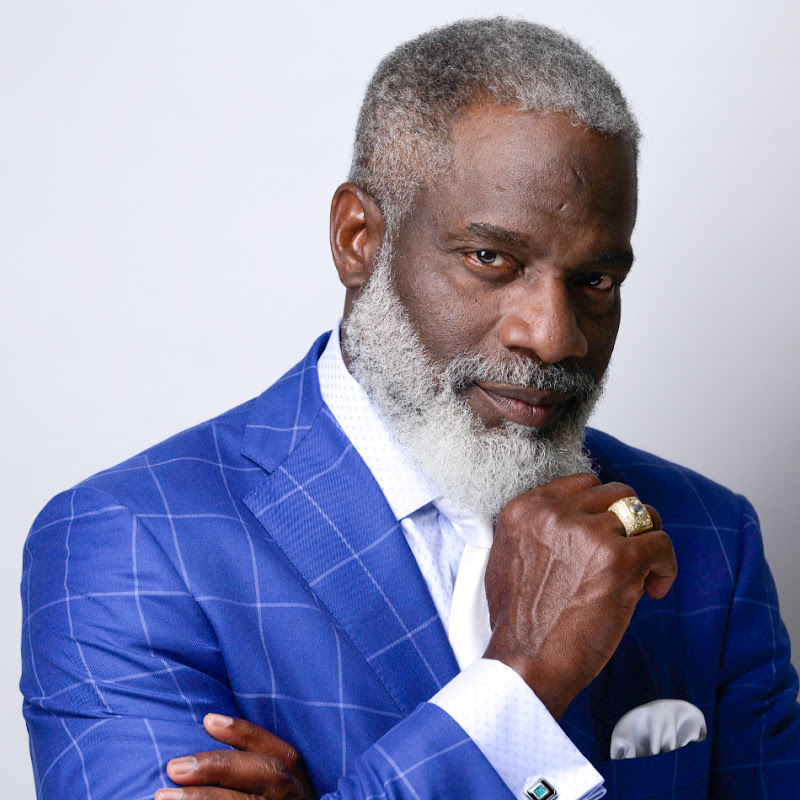
Myron Golden
1.43M subscribers
25.6K views · 1 week ago
AI PROOF OF YOUR CAREER | How To Keep AI Stealing Your Job Or Destroying Your Business AI is changing the way people work, and businesses that fail to adapt risk being left behind. The question isn’t whether AI will impact your career or business—it’s whether you’ll be prepared for it. In this powerful message, Myron Golden breaks down how to think about AI, protect your career, and use the changes happening around you to create new opportunities instead of becoming a casualty of them. The core idea is simple but powerful: Don’t compete with AI—learn how to leverage it so you can stay valuable and make your business stronger. You’ll learn: Why AI is changing the future of work How to make your career more valuable in an AI-driven world Why ignoring AI can put your business at risk How to think about AI as an opportunity instead of a threat Ways to leverage AI to increase your productivity How business owners can adapt to rapid technological change Why learning to work with AI can give you a competitive advantage This message will help you understand how to prepare for the changes AI is bringing to the workplace, protect your value, and position yourself to win in the fu
✦ What fans are saying
32 public comments · synced 6 hours ago · 88% positive

zealheals
1 week ago
This is chock full of wisdom. It could be 3 full series. So many Selah moments, I need a vacation to have time set aside to re-listen to this one. Technology + Philosophy + Psychology in 1 video 😮 Definitely using this for my thesis 😅
♥ 9on YouTube ↗

JTrades-EZ
1 week ago
That breakdown of human psychology was A1. It hit spiritually!!!🙏
♥ 83 replieson YouTube ↗

tammycowans
1 week ago
I am in the process of learning to become a multiplier due to starting with little to no capital. But thats okay, (for now) it’s actually working because I’m working it! 😊
♥ 62 replieson YouTube ↗

nsudatta-roy8154
1 week ago
"How to keep AI Stewling" your job? Did you use AI to make the title?
♥ 55 replieson YouTube ↗

NetworkMarketingCowboy
1 week ago
The scary part isn’t AI replacing people. It’s people who know how to use AI replacing those who refuse to adapt.
♥ 4on YouTube ↗

OpereBolsa
1 week ago
WoW this is the most valuable and priceless micro sales training ever. Thank you Myron
♥ 42 replieson YouTube ↗

SimonJijiri-p3m
1 week ago
I got total transformation when I met uncle Myron❤
♥ 3on YouTube ↗

bradfordrhoades
1 week ago
One category I might add is AI as a long-term strategic thinking partner. As a professional artist, I use AI not simply to answer questions, write content, or create assets, but to help me see patterns, challenge assumptions, remember the larger strategy, and turn scattered ideas and brainstorming into a coherent business and body of work over time. I still provide the vision, experience, and final judgment, but AI helps me think more clearly and build greater continuity between individual decisions. It feels less like using a tool for isolated tasks and more like an ongoing collaboration that strengthens both my creative work and the business around it.
♥ 3on YouTube ↗

MLeyba
1 week ago
Myron the whole world loves you! Thank you for coming so far to be the person you are now so that you can help millions of people! May you have nothing but the most fantastic super duper days! ❤ Love one of your biggest supporters Mateo
♥ 31 replyon YouTube ↗

undercover513
1 week ago
I found you through the School of Hard Knocks. I got so much inspiration from the interview that I had to subscribe to your channel. 🙏🏻
♥ 31 replyon YouTube ↗

vwoolford1
1 week ago
Good morning/good afternoon family from the future!
♥ 3on YouTube ↗

Bossuhzi
1 week ago
Here after your amazing teaching in Iman Gadzhi AI side hustle summit. 🔥🔥
♥ 2on YouTube ↗

Saypreach_topic
1 week ago
Another amazing week great to start with Mr Golden video on Mondays🙌🙏💯
♥ 21 replyon YouTube ↗

eyeseeeverything25
1 week ago
Once I'm wealthy I hope to meet Myron and tell him how im currently poor but have some of his sane exact thoughts and many times when watching his videos I know what he's going to say because im already thinking it like when he talked about racing the person in a car, then a ✈️, then a jet!! I also use AI to help me with my digital products. I know I have a wealthy mindset and will be NEXT!! I also read the book Rich Dad Poor Dad before finding Myron and I haven't been the same since 🥰🤑❤️
♥ 22 replieson YouTube ↗

RedDotReturnsX
1 week ago
This is GOLD
♥ 1on YouTube ↗

michaeloliver5760
1 week ago
On time message. Thank you Myron
♥ 1on YouTube ↗

Firetracks
1 week ago
Thank you Myron! 🎯🔥🔥🔥
♥ 11 replyon YouTube ↗

williamenzor6392
1 week ago
That's so good ❤
♥ 1on YouTube ↗

mikemalagies
1 week ago
love it Myron!
♥ 1on YouTube ↗

Nostalgia_033
1 week ago
Found you through Iman Ghazi summit side hustle so happy to get to hear such an inspiring person
♥ 11 replyon YouTube ↗
eyeseeeverything25
1 week ago
Yes because I HATE simplifying math in school 😂
♥ 1on YouTube ↗

JeremiahVentures
1 week ago
Hey Myron, I love learning from you and I was wondering if you could come to our church and preach there.
♥ 13 replieson YouTube ↗

Chris-m2r6w
1 week ago
Gatekeepers are obsolete. Skipping American Idol for a YouTube channel makes perfect sense for creators who want to own their audience right from the very start. How long until viewers become actual buyers?
♥ 1on YouTube ↗

NicholasYoung-t2u
3 days ago
Golden! Thank you Mr Golden
♥ 0on YouTube ↗

sebastianimanche
15 hours ago
God bless you sir
♥ 0on YouTube ↗

jasonray6888
1 week ago
Instant classic.
♥ 0on YouTube ↗

cfalletta7220
1 week ago
Yo Myra, that’s a great way to get people to pay. You just introduce fear. 🤣 😂😂😂😂
♥ 0on YouTube ↗

neomothusiakadfg2492
1 week ago
So meaning you can duplicate yourself with AI.
♥ 0on YouTube ↗

arhametae
1 week ago
This is real Myron Golden, not Byron Silver.
♥ 0on YouTube ↗

realaarontran
1 week ago
AI isn’t the threat. Staying at the same skill level while the technology evolves is. The real advantage comes from learning how to use AI to multiply your existing strengths.
♥ 0on YouTube ↗
✦ Insights from this video
Read from the transcript · every timestamp jumps the player
In short
Myron Golden walks through the economic eras from agriculture to AI, then lays out three things that keep AI from replacing you: technology (the seven levels of AI use), philosophy (the simplifier/multiplier framework from Dan Sullivan), and human psychology (head, heart, hands). He closes with the one thing you can say to a prospect that makes them buy, and the three things most people say instead that kill the sale.
Chapters
Key points
- 01
Earn in the current era, not the past
Golden traces agricultural, industrial, distribution, technology, information, techno-info-tainment, partnership and now the AI age, arguing most people who struggle financially are trying to earn a living in a past economic era.
- 02
AI plus psychology beats AI alone
AI won't replace you, but someone good at AI might; if you understand both the technology and basic human psychology, you beat the person who only has AI because AI has no experiences and can't read the room.
- 03
Seven levels of AI usage
How AI works, asking and answering questions, automations, building assets, agentic AI, an arena of agents, and finally autonomous AI with your own large language model.
- 04
Use AI to build assets, not answers
Poor and middle class people work for money, rich people build assets and let income follow, so use AI to create books, courses or software rather than treating it like a glorified Google.
- 05
Simplifier or multiplier, pick one
Ask which activity would drain your battery over ten straight days; then use AI to cover the opposite role until you can partner with a real human who fills it.
- 06
Sell the payoff, not the pieces
Your offer has only one positive aspect to talk about: what they'll be able to do when they say yes that they can't do now, not your trinkets, training or time.
Lines worth keeping
“Most people who are struggling financially are struggling because they're attempting to earn a living in the past.”
The thesis that frames the whole economic-eras history lesson.
“AI is not going to replace you in your job, but somebody who's good at using AI might replace you in your job.”
Reframes the job-loss anxiety as a skills gap rather than a machine takeover.
“Too many entrepreneurs go through life attempting to strengthen their weaknesses. So they end up being an entrepreneur with a whole lot of strong weaknesses.”
The punchline of the simplifier/multiplier argument for partnering instead of self-improving.
“Fear is caution over a real and present danger. Anxiety is caution over a future imagined danger.”
The distinction Golden uses to dismantle 'fear of failure' and explain why people don't act.
“Stop talking about what your product has. I know you're proud of it. Nobody cares. They only care what they get.”
The blunt sales correction the psychology section builds toward.
What to do next
- 1
Find which of the seven AI levels you're on and level up from asking questions.
About 90% of people use AI as a glorified Google, which won't keep you relevant in business or in your job.
- 2
Assign the tasks eating your time and mental bandwidth to AI automations.
That's the shift that makes you valuable rather than replaceable.
- 3
Use AI to build assets like books, courses or software, but don't let it write the book for you.
Income follows assets, and a book AI wrote will eventually expose that you don't know the material.
- 4
Decide whether you're a simplifier or a multiplier using the ten-day battery test, then partner with the opposite.
If one will chase a thousand, two will put ten thousand to flight, so 50% of a million beats 100% of a hundred thousand.
- 5
In every presentation, talk only about the payoff, never the pieces, process or person.
Anything other than the payoff makes them focus on the negative aspect, manufacture doubt, and become powerless to buy.
Mentioned in this video
- PersonDan SullivanAuthor of the book Golden uses for his simplifier/multiplier philosophy, including the battery-drain test for figuring out which one you are.
- BookThe Simplifier Multiplier CollaborationThe Dan Sullivan book that gave Golden his framework for who to partner with.
- PersonJake Van CleeCited as a brilliant source on the 'abstraction layer' concept for making AI agents functional.
- BookFrom the Trash Man to the Cash ManGolden's own book written 20 years ago that still earns over $100,000 a year from book sales alone as an example of an asset.
- CompanyAmazon KDP Select and AudibleGolden explains their royalty splits and says he keeps his physical books off Amazon because his assets should acquire customers for him, not for Amazon.
- ScriptureRomans 6:17The source of Golden's head, heart, hands sequence: obeyed from the heart the form of doctrine delivered to you.
- ScriptureJohn 13:17'If you know these things, happy are ye if you do them' mapped to focus, feeling and function.
- Toolaiageblueprint.comFree AI Age Blueprint Golden offers to help viewers avoid common AI mistakes.
This video answers
- ?Will AI actually take my job, and what makes someone safe from it?
- ?What are the seven levels of AI use and which one am I on?
- ?Should I let AI write my book or create my product?
- ?Why do I procrastinate on things I know I should do?
- ?What's the one thing I should say to a prospect to get them to buy?
? Ask this video
Answers come from this transcript only
Ready-to-post clips
Picked from the transcript · grow every other platform from this one
- YouTube Shorts12:05–12:47 · 42s
“AI won't take your job. Someone using AI will.”
It reframes the biggest fear about AI into a specific, actionable edge in under a minute.
AI can't read the room. You can. That's your advantage.
- Instagram Reels18:14–19:12 · 58s
“I wrote this book 20 years ago. It still pays me.”
A concrete income number attached to a 20-year-old asset makes the rich-vs-poor point undeniable.
Poor people work for money. Rich people build assets and let income follow.
- TikTok38:47–39:47 · 60s
“There's no such thing as fear of failure.”
A contrarian claim plus the alligator story delivers a memorable distinction people will repeat.
Fear is caution over real danger. Anxiety is caution over a danger you imagined.