How To Remember Everything Without A Photographic Memory
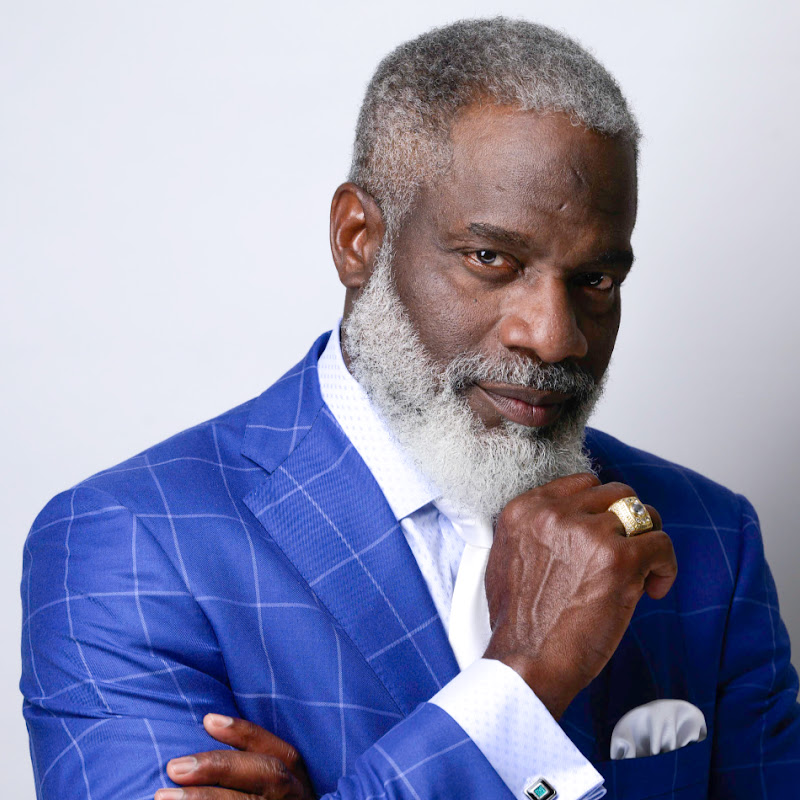
Myron Golden
1.45M subscribers
25.6K views · 3 weeks ago
SUPERCHARGE YOUR MEMORY | How To Remember Everything Without A Photographic Memory What if you could dramatically improve your ability to remember names, information, ideas, and important details without having a photographic memory? In this powerful message, Myron Golden breaks down practical principles for improving your memory and explains how you can train yourself to remember more by changing the way you process and organize information. The core idea is simple but powerful: A strong memory isn't only something you're born with. You can develop better ways of learning, connecting, and recalling information. You’ll learn: Why memory is a skill you can develop How to improve your ability to retain important information Why the way you process information affects what you remember How association and repetition can strengthen your memory Ways to make information easier to recall Why focus and attention are essential for remembering things How to build better learning habits Practical principles for improving your ability to learn and remember This message will help you rethink what is possible with your memory and give you practical ways to become better at retaining
✦ What fans are saying
37 public comments · synced 2 hours ago · 92% positive
Questions fans keep asking
What landed
- The scripture memorization method“This is great! Thanks for the method of memorizing scripture. ❤” · fleetingbeauties4674
- The book recommendations list“The books mentioned: 1. The Oracle by Jonathan Cahn 2. You Squared by Price Pritchett 3. The one minutes millionaire by Mark Victor Hansen and Robert G. Allen 4. The Greatest Salesman In The World by Og Mandino 5. Oversubscribed by Daniel Priestley 6. Business Secrets From The Bible by Rabbi Daniel 7. No B.S. Marketing To the Affluent by Dan Kennedy” · OsiboteAYOMIDE
- Leave your agenda at the door line“Leave your agenda at the door🙏” · armando.trevino
Overwhelmingly appreciative, with fans thanking Myron for the memory method, the book list, and spiritual encouragement.

OsiboteAYOMIDE
2 weeks ago
The books mentioned: 1. The Oracle by Jonathan Cahn 2. You Squared by Price Pritchett 3. The one minutes millionaire by Mark Victor Hansen and Robert G. Allen 4. The Greatest Salesman In The World by Og Mandino 5. Oversubscribed by Daniel Priestley 6. Business Secrets From The Bible by Rabbi Daniel 7. No B.S. Marketing To the Affluent by Dan Kennedy
♥ 10on YouTube ↗

iamdevonnicholeknighton
3 weeks ago
I wasn’t feeling my best mentally but I tuned in and I am doing great now. These messages are full of peace. Praise God🙌🏾🙌🏾
♥ 7on YouTube ↗

armando.trevino
3 weeks ago
Leave your agenda at the door🙏
♥ 61 replyon YouTube ↗

fleetingbeauties4674
3 weeks ago
This is great! Thanks for the method of memorizing scripture. ❤
♥ 3on YouTube ↗

flameinkz
3 weeks ago
🔥🔥🔥
♥ 3on YouTube ↗

RichieTheRemnant
3 weeks ago
Talk about FREE game this mornin! 😮💨 Astute questions & answers for sure! Thank you
♥ 2on YouTube ↗

estebanjimenez1192
3 weeks ago
Let’s go!
♥ 2on YouTube ↗

KilaMaee
3 weeks ago
I’m so glad this question was asked. I struggle with short-term memory. I had meningitis at 8 years old and it damaged some neurons. It’s incredibly frustrating.
♥ 1on YouTube ↗

yungyardie1876
8 hours ago
14:30 favourite books
♥ 1on YouTube ↗

Blinktubz
3 weeks ago
This IS. Legendary. Thank you in advance . 20:42
♥ 1on YouTube ↗

justLamonte
3 weeks ago
yup that's how I learned in grade school 4:15
♥ 1on YouTube ↗
yungyardie1876
7 hours ago
27:40💯
♥ 1on YouTube ↗

Jerrycandoit
3 weeks ago
Pls i need the name and authored of the books mentioned
♥ 11 replyon YouTube ↗

TheBottleneckBreakdown
1 week ago
I love when someone gives me a list of book recommendations and I’ve read half of them Because the ones I haven’t read are usually gems OG know how to pick impact on me back in the day
♥ 0on YouTube ↗

IAmMelloWill
3 weeks ago
14:55 you squared definitely changed my life. I finally quit my job after listening to that audiobook 20x.
♥ 0on YouTube ↗

zanelemayisela3072
2 weeks ago
You are changing our lives. Thank you 🙏🏽
♥ 0on YouTube ↗

oliviaroseb
3 weeks ago
Love your YouTube content
♥ 0on YouTube ↗

BrandonMadison-b7m
3 weeks ago
This is a very smart guy 🔥
♥ 0on YouTube ↗

JaydenBarrino
2 weeks ago
Dr.Golden, i wanna start off by saying you’ve gotten me through a rough time and everything you do is great. I am only 21 but I highly inspire you and want to take after you when it comes to raising my family and being the man god would want me to be .I have a few questions for you if you would not mind answering them !! How do you speak so proper ? how did you teach yourself to be good at putting your intelligence into words simple Enough for people who may not be sufficient enough to understand you? lastly how did you teach yourself to stop cursing??
♥ 0on YouTube ↗

MrOthellojr
3 weeks ago
😭😭😭😭😭😭😭😭😭 very good show. I’m from Miami litltle Haiti ….
♥ 0on YouTube ↗

tasteoflov3
3 weeks ago
Thanks for the list of books
♥ 0on YouTube ↗

chosenbyYahweh7
3 weeks ago
Thank you for sharing the knowledge and wisdom God has given you. You have definitely encouraged me to do better. Much appreciation brother 🫡
♥ 01 replyon YouTube ↗
tasteoflov3
3 weeks ago
GREAT QUESTIONS SO FAR 😱😱😱😱
♥ 0on YouTube ↗

Letsmovevamos
3 weeks ago
Always giving value
♥ 0on YouTube ↗

naomi5809
1 week ago
What if you started measuring time in distance across every area of your life? Instead of asking how long something takes, ask: how fast can I go far? I just ran this concept through AI, and the breakdown was mind-blowing. Huge credit to Mr.Myron Golden for the insight!❤
♥ 0on YouTube ↗

patrickwilson1808
2 weeks ago
Luke's question. My my my I'm right there and I'm stuck. That Solomon prayer. Ok I needed that.
♥ 0on YouTube ↗

johncychosz41
2 weeks ago
Our ability to recall memories requires a chemical the brain make that I couldn’t spell for the life of me. When we drink or eat something that has micro plastics, some of those plastics can get stuck in your brain. They make a toxin that eats that chemical you need to recall memories. This is the real reason older people have worse memories because they have been consuming these for longer. Doctors just go with what is easy or are outdated. FYI, bottled water and microwave popcorn are some big ones for adding a lot of micro plastics to your body. I recommend anyone who reads this look this subject up so you can make wiser choices.
♥ 0on YouTube ↗

ZakiiyahMuldrew21351
3 weeks ago
Myron I remember scriptures because some of the scriptures are saying the same thing, but in a different way also with the stories in the Bible
♥ 0on YouTube ↗

ItsAcoldGamePodcast
1 week ago
How fast can you I go far 🔑🔑🔑 that was good
♥ 0on YouTube ↗
MrOthellojr
2 weeks ago
MYRON…. I WATCH DR.JOE…. AT LEAST THATS WHAT I CALL HIM 😂😂😂😂 NO I HAVENT MET HIM YET. THANK YOU!!!!
♥ 0on YouTube ↗
✦ Insights from this video
Read from the transcript · every timestamp jumps the player
In short
In a studio Q&A, Myron Golden explains that almost everyone has a great memory but a terrible recall system, and lays out his three-step method for remembering names plus the writing-and-reading schedule he used as a teenager to memorize scripture. The conversation then widens into discerning God's will, his favorite books, attitude as a trained habit, and how a single physics tip from a long drive champion rewrote a 34-year golf swing.
Chapters
Key points
- 01
Memory is fine, recall is broken
Golden argues everyone already has a great memory; what people lack is a recall system, which is why a rhyme learned in childhood sticks for decades.
- 02
Three steps to remember names
Listen instead of planning your reply, ask how the name is spelled, and ask whether they were named after someone, so you build multiple anchors to the name.
- 03
A 21-day scripture memorization schedule
Write the passage by hand, then read it out loud seven times a day for a week, three times a day the second week, and once a day the third week.
- 04
Abandon your agenda to know God's will
He says you must be willing to accept God's will before you know what it is, the way Abram left his country for a land he had not yet seen.
- 05
Attitude is trained, not inherited
Golden says culture programs everyone toward negativity, so people with good attitudes have deprogrammed and reprogrammed themselves rather than being naturally lucky.
- 06
Count experiences, not years
Most people have one year of experience repeated over decades; he suggests measuring life by the quantity of quality experiences packed into the years.
Lines worth keeping
“Everybody has a great memory. Most people just have a terrible recall system.”
The central reframe of the whole memory section.
“People say, I'm terrible at remembering names. Well, that's a good way to stay terrible at remembering names.”
Shows how the self-description becomes the limitation.
“You cannot learn God's will about anything until you abandon your agenda.”
His one-line answer to the discernment question that follows.
“It's not a sin for a bird to land on your head, but it is a sin for him to build a nest up there.”
His picture of the difference between feeling a negative emotion and nurturing it.
“We will never behave consistently in a way that's inconsistent with our programming.”
Ties the memory, attitude and golf swing stories into one principle about subconscious results.
What to do next
- 1
When someone gives you their name, stop planning your reply and lock onto the name.
Most people never actually hear the name because they are thinking about what they will say next.
- 2
Ask how the name is spelled and whether they were named after someone.
Each answer gives you another representation and anchor so the name isn't a disconnected word.
- 3
Memorize scripture by hand-writing it, then reading aloud seven times a day for a week, three times a day the second week, once a day the third.
After three weeks it will be hard to forget the passage.
- 4
Pray the prayer of Solomon daily: ask for the wisdom to do what you were put here to do in a way that pleases God and serves the people whose path you cross.
Being yielded to God and serving people is how the answer about direction shows up.
- 5
Find someone already achieving what you want and interview them about their beliefs, mental syntax and physiology.
It's the ultimate shortcut because people who do it with ease believe and operate differently than you do.
Mentioned in this video
- BookThe Oracle by Rabbi Jonathan CahnHe calls it his favorite book far and away, about uncovering the Jubilee mystery, and says he wanted to cry when it ended.
- BookYou Squared by Price PritchettA 36-page booklet he wishes he had written, with not a single wasted word.
- BookThe One Minute Millionaire by Mark Victor Hansen and Robert G. AllenListed among four extra book recommendations.
- BookThe Greatest Salesman in the World by Og MandinoNamed as another great read.
- BookOversubscribed by Daniel PriestleyCalled one of his favorites, and he also mentions Priestley's newer Lifestyle Business Playbook which he hasn't finished.
- BookBusiness Secrets from the Bible by Rabbi Daniel LapinRecommended as life-changing financially and in business.
- BookNo BS Guide to Marketing to the Affluent by Dan KennedyRounds out his list of business book recommendations.
- PersonPhillis MetiFive-time world long drive champion from New Zealand who told him that because his wingspan is longer than his height, his swing should be more upright.
This video answers
- ?How do you retain so much information without losing it?
- ?What is a reliable way to remember people's names?
- ?How do I memorize scripture and make it stick?
- ?How do I tell the difference between my own ambition and what God wants for my life?
- ?Why does a good attitude seem easier for some people than others?
? Ask this video
Answers come from this transcript only
Ready-to-post clips
Picked from the transcript · grow every other platform from this one
- YouTube Shorts1:43–2:25 · 42s
“Everybody has a great memory. Most people have a terrible recall system.”
A counterintuitive reframe plus the Mary-had-a-little-lamb proof lands instantly with zero setup.
You don't have a memory problem. You have a recall system problem.
- Instagram Reels9:08–9:52 · 44s
“You can't learn God's will until you abandon your agenda.”
One sharp, repeatable spiritual principle delivered as a complete thought with a clear payoff line.
You have to be willing to accept God's will before you know what it is.
- LinkedIn28:54–29:36 · 42s
“You don't have 40 years of experience. You have two weeks, repeated.”
A brutal, specific line about wasted time that people immediately apply to their own careers.
Most people live one year of experience repeated across decades. Measure experiences, not years.