How To Get Rich As A Self Published Author
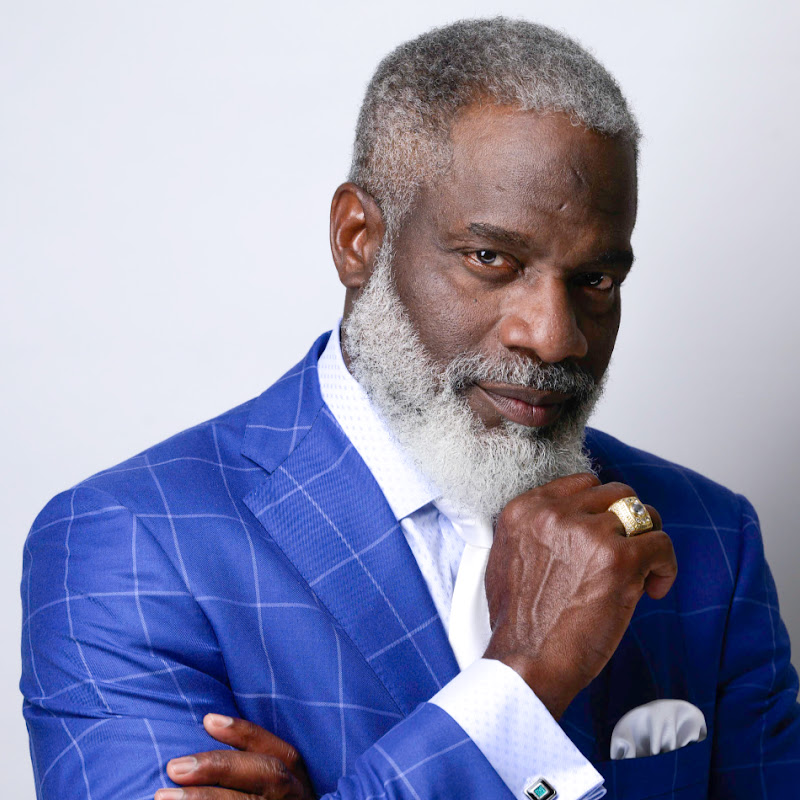
Myron Golden
1.45M subscribers
54K views · 1 week ago
THE PRINT MONEY FORMULA | How To Get Rich As A Self-Published Author What if your knowledge, experience, and ideas could become more than just words on a page? A book can be more than something people read. It can become a powerful business asset that helps you create income, build authority, and reach a much larger audience. In this powerful message, Myron Golden breaks down how to think about self-publishing as a wealth-building opportunity and how authors can turn their knowledge into a profitable business. Instead of viewing a book as the final product, learn to see it as a tool for creating value and opening doors to new opportunities. The core idea is simple but powerful: Your book can do more than generate sales. It can position you as an authority, attract customers, and create opportunities to monetize your knowledge. You’ll learn: How to approach self-publishing as a business opportunity Why your knowledge and experience can become valuable assets How to turn a book into a tool for building authority Why selling books can be only one part of your revenue strategy How to use your book to attract customers and create new opportunities Why understanding your audien
✦ What fans are saying
66 public comments · synced 4 hours ago · 92% positive
Questions fans keep asking
What landed
- The single-book vacuum concept landed hard with viewers“14:00 Wow! Why didn't I think of that term for this!! Vacuum... The Single-Book Vacuum.✔️” · zealheals
- The spiritual value of words framing“I am in the process of writing a book and your advice was very good. I am planning on self-publishing my book. My book solves or helps solve another person's problems. The spiritual side of using words impacted me. I understand what you meant about the value of words. I know I can sell my book better than a book store or publisher.” · bluebonbon22
- I can sell my book better than Barnes and Noble line“Thank you Unc. I can sell my book way better than Barnes or Noble. 😆💪🏽👍🏽” · JCharming
Overwhelmingly positive and action oriented, with many aspiring and existing authors saying the video pushed them to publish, plus a few typo callouts and small objections.

gideonakpanTHE_PROF
1 week ago
If you are not reading. Don't bother to write a book.
♥ 443 replieson YouTube ↗

qdotj
1 week ago
How timely for video to come across my feed. God is Always on time.
♥ 162 replieson YouTube ↗

bluebonbon22
1 week ago
I am in the process of writing a book and your advice was very good. I am planning on self-publishing my book. My book solves or helps solve another person's problems. The spiritual side of using words impacted me. I understand what you meant about the value of words. I know I can sell my book better than a book store or publisher.
♥ 11on YouTube ↗

JeampierJGarcia
1 week ago
May the Lord increase Abundantly your wisdom and help you spread more light threw out the world ❤️🙏
♥ 9on YouTube ↗

OckieCoetzer
1 week ago
Typo in the title
♥ 71 replyon YouTube ↗

360haircuts
1 week ago
The amount of wisdom we've garnered from this man, both blibical faith and financial literacy, we couldn't resist calling our first son Myron 😅though it has a beautiful Christian tradition roots. It was one of the gifts brought to Jesus by the Magi and is associated in Christian tradition with honor, devotion, sacrifice, and sacredness
♥ 51 replyon YouTube ↗

sonyawalkercreations5991
1 week ago
This is what I needed. Thank you Myron. ❤
♥ 41 replyon YouTube ↗

Benimationlightstudios
1 week ago
Am 24 , currently writing a book it's called David's succes amour...this video has inspired me to finish it up...that's mr myron
♥ 3on YouTube ↗

theworkfromhomequeen8480
1 week ago
I have published several of ebooks
♥ 3on YouTube ↗

jensinebenson
1 week ago
This is crazy as I’m currently working on publishing my first book. “Lord, are you talking to me?” Lol. Hmmmm 🤔😝
♥ 3on YouTube ↗
JeampierJGarcia
1 week ago
Thank you ❤ Brother for this video and for reading my comments
♥ 3on YouTube ↗

MissleLaunch
1 week ago
Seelf Published Author
♥ 3on YouTube ↗

coachtanishamarie
1 week ago
I sell my books to schools over 5000 sold so far ❤❤❤❤
♥ 21 replyon YouTube ↗

mznetta3485
1 week ago
This video is for me. Thank you!
♥ 2on YouTube ↗

brianmaloney091
1 week ago
Thankyou Myron for another great video
♥ 21 replyon YouTube ↗

kitcherapywithfelicia
1 week ago
Thank you Mr. Golden! This is golden information! I’ve finished my first manuscript & will self-publish!
♥ 21 replyon YouTube ↗

gregory.rutledge
1 week ago
From unknown pest to welcomed guest! Yes, people are excited to have me as a guest on the podcast now! 😅
♥ 2on YouTube ↗

ZakiiyahMuldrew21351
1 week ago
Blessed again
♥ 2on YouTube ↗
coachtanishamarie
1 week ago
I teach people how to write books 📕 to leave for their legacy
♥ 2on YouTube ↗

JCharming
1 week ago
Thank you Unc. I can sell my book way better than Barnes or Noble. 😆💪🏽👍🏽
♥ 21 replyon YouTube ↗

zealheals
1 week ago
The title is too nice. Should be "How To Print Money...legally" 😅 Grateful for this information 🙌🏾
♥ 21 replyon YouTube ↗

batiyahc
1 week ago
I wrote 5 books all on Amazon…still trying to figure out how to build something from them. I can’t wait to watch this video.
♥ 1on YouTube ↗

NatashaJohnBaptiste
1 week ago
I was tracking all the way Myron I watch your videos everyday morning school. I have written a good book and that vacuum blew my mind. I have written a number of books and have them on my website but that vacuum 🤯I have been applying your principles and am inspired. Thank you🙏🏾
♥ 1on YouTube ↗

AdamAreford
1 week ago
The Kingdom of God v.s the kingdom of darkness. The battle for your mind heart body soul and spirit is my first book.
♥ 1on YouTube ↗

ABBAMYRON
1 week ago
GOD'S GREAT DAY TO US ALL... PEACE, LOVE AND NAPPINESS!!!
♥ 1on YouTube ↗

VeneziasLaMiaBellaCasa
1 week ago
THANK YOU 🎉 I am now officially going to write the book 📕 notes noted! 😂 appreciate you sharing this knowledge.
♥ 1on YouTube ↗

TonyAurice
1 week ago
👏🏿👏🏿👏🏿👏🏿 taking notes as usual really good vid
♥ 11 replyon YouTube ↗
zealheals
1 week ago
Print Money Formula ✔️
♥ 1on YouTube ↗

Rise-and-Shine-4
1 week ago
Finished book few days ago. What are the chances .... ;) Thank you
♥ 1on YouTube ↗

MagnusMedina
1 week ago
This is exactly what I needed. I wrote a business book last year but never published it because I wasn't sure how to handle the process or the marketing. Does anyone know if Myron has a program that teaches this specifically?
♥ 11 replyon YouTube ↗
✦ Insights from this video
Read from the transcript · every timestamp jumps the player
In short
Myron Golden argues that selling your own book is one of the most profitable things an entrepreneur can do, and walks through his actual numbers: a book that costs $2.33 to print brings in roughly $24.65 per sale after shipping. He explains why he refuses to sell on Amazon or in bookstores, why each book gets its own single-product website, and the rules he follows for writing and pricing books. He also covers why most self-published authors never sell 500 copies and what they get wrong.
Chapters
Key points
- 01
Sell books in a vacuum
Each of Myron's books lives on its own site with no other titles for sale, so no other author's book competes with it at the point of purchase.
- 02
The print money math
A book that costs $2.33 to print sells for $19.99 plus $9.99 shipping, leaving about $24.65 per sale after shipping costs, which he calls over a 1,000% return.
- 03
Bookstores are the worst place
A first-time author should never want to be in a bookstore, online or offline, because too many choices confuse the buyer and a confused mind says no to an unknown.
- 04
Disagrees with the standard advice
He rejects the common claim that selling your book is one of the worst ways to make money from it, and says he could make $100,000 a year from two or three books alone.
- 05
Don't write your story
Nobody wants to read the book you've always wanted to write about yourself, and if you're not a reader you can't write a good book.
- 06
Publisher splits leave you 10%
Through a traditional publisher the bookstore takes 40%, the publisher 35%, the distributor 15%, and the author gets 10% while still having to promote.
Lines worth keeping
“If you know something and it would be beneficial to other people, please write a book. But if you are a dummy and don't know anything, please don't write a book.”
Sets the standard for who should be publishing at all.
“I'm better at selling books than Barnes & Noble. They just happen to be a place where people know they can go buy books. They ain't selling books.”
Explains his whole refusal to chase bookstore distribution.
“It's the words that you put on the page that make the value of the page increase because you added spirituality to physicality.”
His framing for why a $2.80 object can sell for $29.99.
“Publishing a book can elevate your brand from pest to guest.”
The positioning argument in a single line.
“If you're not a reader, don't be a writer.”
His bluntest prerequisite for writing something people will pay for.
What to do next
- 1
Self-publish your first book rather than chasing a traditional publisher.
As an unknown author you're not actually looking for distribution, and the traditional split leaves you only 10%.
- 2
Build a separate single-book website so your title is the only thing for sale there.
Selling in a vacuum means Robert Kiyosaki's or Robert Greene's books can't compete with yours at the point of purchase.
- 3
Keep the customer data and the cash flow from every sale.
A first-time author who gives up both the data and the money has no asset left.
- 4
Price your book at whatever serves your objective, not what others charge.
Publishing from first principles means the model and price fit your goal, and he sells his at prices that make him smile.
- 5
Write about what benefits others, not your personal story, and read widely before you write.
Nobody wants your memoir, and if all you do is watch TV you can't think in the flow of a book.
Mentioned in this video
- BookBook the BusinessA book by Dan Kennedy and Adam Witty about using a book as multiple income streams, which he's rereading but disagrees with on one point.
- PersonDan KennedyCo-author of Book the Business, which Myron calls a great book despite his contention with it.
- PersonAdam WittyCo-author of Book the Business.
- BookFrom the Trash Man to the Cash ManMyron's own book, sold at trashmantocashman.com, with over 175,000 copies sold.
- BookBoss MovesMyron's book sold only at bossmovesbook.com, tens of thousands of copies in five years.
- PersonWarren BuffettCalled the greatest investor of all time for averaging 20%, compared unfavorably to the return on selling a printed book.
- PersonDan SullivanAn author whose books Myron has bought many of, as an example of a reader becoming a revenue fountain.
- PersonRabbi Jonathan CahnMyron owns every single one of his books, another example of repeat buying.
This video answers
- ?Can you actually make money selling self-published books, or should you give them away?
- ?Why shouldn't I try to sell my book on Amazon or get it into bookstores?
- ?What do the economics of printing and shipping a book actually look like?
- ?How much of a $20 book do I keep if I go through a traditional publisher?
- ?What kind of book should a first-time author write, and what should they avoid?
? Ask this video
Answers come from this transcript only
Ready-to-post clips
Picked from the transcript · grow every other platform from this one
- YouTube Shorts3:35–4:18 · 43s
“I sell $3,000 worth of books every single day”
A concrete daily and monthly revenue number destroys the common belief that books don't sell.
Don't tell me you can't sell books — here's what the numbers actually look like.
- Instagram Reels7:52–8:45 · 53s
“This book costs me $2.33 to print. Do the math.”
Live arithmetic ending on a 1,000% return punchline makes the claim impossible to scroll past.
The print money formula, broken down to the cent.
- TikTok12:49–13:32 · 43s
“The worst place to sell a book is a bookstore”
A counterintuitive claim plus a bold Barnes & Noble callout delivers a complete, quotable argument.
Sell your book in a vacuum, not in a store full of better-known authors.