How To Make Your Dreams Come True (Without Working Harder)
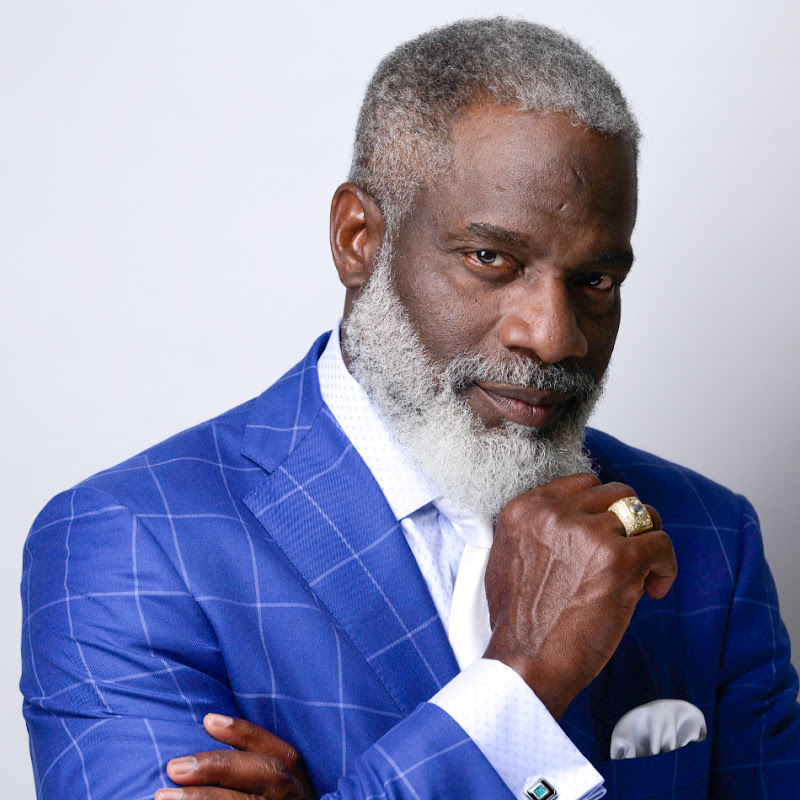
Myron Golden
1.43M subscribers
147K views · 3 months ago
→𝐉𝐨𝐢𝐧 𝐌𝐲𝐫𝐨𝐧’𝐬 𝐋𝐢𝐯𝐞 𝐂𝐡𝐚𝐥𝐥𝐞𝐧𝐠𝐞 𝐓𝐨𝐝𝐚𝐲← https://www.makemoreofferschallenge.com/ DESIRES OVER NEEDS | How To Make Your Dreams Come True (Without Working Harder) Most people spend their lives focused on their needs. But extraordinary results often come from pursuing meaningful desires. In this powerful message, Myron Golden reveals why simply working harder is not the answer to achieving your dreams. Success is not just about effort—it’s about alignment, clarity, and understanding the difference between surviving and thriving. The core idea is simple but transformative: When you learn to focus on the right desires and align your actions with them, you can achieve more without simply adding more work. You’ll learn: Why desires are often a greater motivator than needs How to identify the dreams that are truly worth pursuing The difference between working harder and working smarter Why clarity creates momentum and progress How to align your actions with your highest goals The mindset shift required to move from survival mode to purpose-driven living Biblical principles behind desire, vision, and fulfillment This message will help you stop chasing more eff
✦ What fans are saying
100+ public comments · synced 5 days ago · 97% positive
Questions fans keep asking
What landed
- The struggle bus into a motorhome line and his humor“Normally, I don’t comment on YouTube videos. But I am addicted to Brother Myron, and when he said “we turn the struggle bus into a motorhome”, I nearly had to pull over to the side of the highway from laughing. Can’t get enough of this gem. His wisdom and wit are straight from our Father in heaven. Thank you Myron Golden.” · OfficialTravisMcReynolds
- Upside unlimited, downside limited decision rule“This was great… “When the upside is limited and the downside is unlimited it’s always a no. When the upside has unlimited potential and the downside is limited it’s an easy yes.”” · ErikandEricaEverafter
- Praying for desires instead of needs, arena of needs vs desire“Man, this is good wisdom, I had been praying for my needs instead of my desires!!!! This is Gold” · marsellecook-morrison1151
Overwhelmingly grateful and energized; viewers call it gold, rewatch it repeatedly, and share the needs vs desire framing with family.

OfficialTravisMcReynolds
3 months ago
Normally, I don’t comment on YouTube videos. But I am addicted to Brother Myron, and when he said “we turn the struggle bus into a motorhome”, I nearly had to pull over to the side of the highway from laughing. Can’t get enough of this gem. His wisdom and wit are straight from our Father in heaven. Thank you Myron Golden.
♥ 2379 replieson YouTube ↗

RabeccaMvula-d7d
3 months ago
someone like my comment, i want to come back here as much as i can
♥ 1705 replieson YouTube ↗

MarshaMinus100
3 months ago
I need to watch this 27 more times
♥ 11315 replieson YouTube ↗

keyanleroux
3 months ago
Man im 18 and I’ve got to say you’ve helped me grow spiritually and financially through my business…God bless sir!
♥ 776 replieson YouTube ↗

ErikandEricaEverafter
3 months ago
This was great… “When the upside is limited and the downside is unlimited it’s always a no. When the upside has unlimited potential and the downside is limited it’s an easy yes.”
♥ 662 replieson YouTube ↗

MySheepHearMyVoice7
3 months ago
Wisdom is the principal thing (Proverbs 4:7) Exalt her, and she shall promote thee (Proverbs 4:8)
♥ 28on YouTube ↗

keltongreshamphotography
3 months ago
I must be doing SOMETHING right, for Myron Golden to take time out to teach me like this. Yall think he's talking to everybody, but this class was just for me. Thank you Jesus for a Myron!
♥ 26on YouTube ↗

NikCarlos-xh9pi
3 months ago
Myron, I've learned a lot from your content over the years, and this thought came to me while listening to this message. Is it possible that even infinite desire is simply a sign pointing to an even deeper nature? A seed does not desire to become a tree; it simply manifests the nature it already contains. A tree does not produce fruit in order to become complete. It produces fruit because it is already complete in its nature. So I wonder: Is the highest form of freedom found in living from infinite desires... or in discovering a nature so full that the fruits are simply its expression? Perhaps the real problem was never scarcity, or even need itself, but our lack of understanding of who we truly are. Thank you for sharing your perspective. It has given me a lot to think about.
♥ 211 replyon YouTube ↗

RichardFisher-qy9bq
3 months ago
I have to start the video over , this is golden 😅
♥ 163 replieson YouTube ↗

simoneforbesSIM1
3 months ago
Omg "recruit expectation to pull in the same direction as desire." That was "mind blowing!"
♥ 14on YouTube ↗

Ricky31628580
3 months ago
Another masterpiece. Myron is definitely Golden 🔥
♥ 14on YouTube ↗

marsellecook-morrison1151
3 months ago
Man, this is good wisdom, I had been praying for my needs instead of my desires!!!! This is Gold
♥ 11on YouTube ↗

ExecutiveAssistantShelly
3 months ago
"The things that I need are as prevalent as oxygen" WOW! What a Mindset!
♥ 8on YouTube ↗

mikemalagies
3 months ago
Love it Myron!! When is the golf youtube channel happening??
♥ 8on YouTube ↗

daylisaelisabeth9883
3 months ago
I needed to listen to this a second time. Too good. Want to get all the juice
♥ 6on YouTube ↗

New_creation_n_christ
3 months ago
God is good and amen to this! Good word brother!
♥ 5on YouTube ↗

katygonzalez2544
3 months ago
Myron thanks so much. This is of the best video.
♥ 5on YouTube ↗

jay_adams_a
3 months ago
God bless you richly sir ❤❤
♥ 5on YouTube ↗

jordanhart9441
3 months ago
Myron you are a brother sent by God at this exact moment in my life when I needed you and this message. Thank you!
♥ 4on YouTube ↗

MissionRichTalk
3 months ago
I have listened to this episode at least three times, and every time I listen, I learn something new. Over the last six weeks, I have intentionally made changes in my life based on several key points from this episode, and the impact has been significant. Also, thank you for the AI system that I pair with your teaching. It has helped me apply these principles more consistently and effectively in my daily life. Thank you for partnering in bringing the AI training system to others and for pairing it with such powerful teaching. I purchased the training system and have found tremendous value in it. I truly thank God for the divine downloads I have been receiving, which I believe are connected to the divine downloads He has given you and that you so generously share with others. Thank you for your obedience, wisdom, and willingness to teach. Your work is making a difference.
♥ 41 replyon YouTube ↗

MrPrestonBrownBestTeacherEver
3 months ago
It was like you spent 50 minutes, pouring gasoline, and at the very last minute you lit a match and set that thing on fire. Literally ran. Expectation Always wins!
♥ 3on YouTube ↗

johnmatthewwilkinson5929
3 months ago
It developed, not evolved. Absolutely. I love it.
♥ 3on YouTube ↗

humanlifeinquotes
3 months ago
This perspective about needs representing limit and dreams representing abundance, is so empowering.
♥ 3on YouTube ↗

zealheals
3 months ago
24:51 😂 WHAT?! On this level, Dr. Golden should have an EA to deal with such time-wasters. $1,500?? They can't be that out of touch. I don’t care if this happened 10 years ago, that's wild. There's no way he should have taken that call, especially after multiple previous calls. Time is a gift and must be stewarded.
♥ 3on YouTube ↗

SimonJijiri-p3m
3 months ago
This video really touched me 😮
♥ 3on YouTube ↗

AbdoulazizBikienga-k2u
3 months ago
Jim Rohn the legend ❤
♥ 3on YouTube ↗

kamlesh-aaa
3 months ago
Myron Golden is gold. Listened to you for the 3rd time.
♥ 2on YouTube ↗

tylothegentleman
3 months ago
These ads are so well placed I can’t even be mad 😂
♥ 2on YouTube ↗

3am917
3 months ago
I am so happy and grateful now that I have Myron Golden in my experience.
♥ 2on YouTube ↗

carreroarts9735
3 months ago
THIS IS PEAK GODLY FINACAIL ADVICE ... THANK YOU
♥ 2on YouTube ↗
✦ Insights from this video
Read from the transcript · every timestamp jumps the player
In short
Myron Golden argues that most people live in what he calls "the arena of needs" — a crowded space defined by competition, judgment and justification — and that the alternative is "the arena of desires," which he says has infinite room. He walks through the trades you make when you switch arenas (can'ts for cans, competition for collaboration, constraints for compounding), then gives a three-step method for activating desire through belief: intend, decide, discipline. He closes with the idea that expectation always wins the tug-of-war, so your job is to recruit expectation to pull alongside your desire.
Chapters
Key points
- 01
Needs is a crowded, rigged arena
Operating from needs guarantees competition, judgment, justification, political positioning and bondage, because you believe resources are scarce and must be taken from someone else.
- 02
Your arena beats your work ethic
The arena you operate in has far more to do with your success or failure than how hard you work, how long you work, or how much education you have.
- 03
Limited downside, unlimited upside
When the upside is limited and the downside unlimited, it's a hard no; when the upside is unlimited and the downside limited, like writing a book, it's an easy yes.
- 04
Say desire, not want
"Want" means both desire and lack, and the subconscious has no dictionary, while "desire" comes from roots meaning of or from the father.
- 05
Intend, decide, discipline
Belief is the catalyst of desire, and you activate it by intending to believe, deciding to believe (cutting off every other possibility), then disciplining yourself to only believe.
- 06
Recruit expectation to your desire
There's a tug-of-war between expectation and desire, and expectation always wins, so the job is to get expectation pulling in the same direction as desire.
Lines worth keeping
“If I am in a race that only I am in, the only thing I can do is win.”
Compresses his whole argument against competing into one line.
“You literally, if you operate in the arena of needs, you have turned the struggle bus into a motor home.”
His word picture for how needs-thinking becomes a permanent way of living.
“We're not running out of natural resources. We're running out of natural resourcefulness because we're living in the arena of needs.”
Reframes scarcity as a mindset problem rather than a material one.
“When you decide, here's what it means. It means I am going to do this or I am going to die in the doing of it.”
Defines the difference between deciding and merely choosing, which is central to his belief method.
“Maybe your real problem is you've been spending too much time looking at the wind.”
Ties the Peter-on-the-water story to the habit of letting circumstances override belief.
What to do next
- 1
Identify which arena you're operating in and ask if you like the results.
All people operate predominantly in one arena or the other, and that choice drives your outcomes more than effort does.
- 2
Stop thinking about your needs and pick specific things you desire to have, do and be.
Focusing on limitation perpetuates limitation, while focusing on desire makes life start improving immediately.
- 3
Intend to believe, then decide to believe, then discipline yourself to only believe.
Belief is the catalyst that activates desire, and deciding means cutting yourself off from every other possibility.
- 4
Drop the word "want" and use "desire" instead.
Want carries a second meaning of lack, and your subconscious mind doesn't have access to a dictionary.
- 5
When doubt shows up, say out loud that you're choosing to believe something else instead.
Faith is created in the ears and doubt in the eyes, so you have to actively work against what circumstances show you.
Mentioned in this video
- PersonJim RohnQuoted for "there's plenty of room at the top, it's the bottom that's crowded" and for saying he doesn't need the money but will take it.
- ScripturePsalm 23Used to explain that "I shall not want" means "I shall not lack," not "I shall not desire."
- ScripturePsalm 37:4Delight thyself in the Lord and he will give you the desires of your heart — Myron reads it as God giving you what to desire first.
- PersonJosh LatimerA friend from the same mastermind who teaches blue-collar business owners funnels, and who used to get frustrated that Myron's channel was small.
- BookOn the Origin of SpeciesMyron shows the original subtitle and calls Darwin's theory a foundational cornerstone of competitive, racist thinking.
- PersonCharles DarwinDescribed as a failed religious priest and pseudoscientist whose theory makes people see everyone as a competitor.
- ScripturePeter walking on waterUsed as the closing illustration: Peter sank when he saw the wind rather than listening to the voice that called him.
This video answers
- ?What is the difference between operating from needs and operating from desires?
- ?How do you decide whether an opportunity is worth saying yes to?
- ?Why does Myron say the word "want" is a problem?
- ?How do you actually change what you believe?
- ?What's the difference between godly desire and covetousness?
? Ask this video
Answers come from this transcript only
Ready-to-post clips
Picked from the transcript · grow every other platform from this one
- YouTube Shorts4:00–4:42 · 42s
“If I'm in a race only I'm in, I can only win.”
A quotable one-liner plus the Jim Rohn 'plenty of room at the top' hook lands a complete idea in seconds.
The arena of needs is crowded. The arena of desire is infinite.
- LinkedIn8:09–9:00 · 51s
“When the upside is limited and downside unlimited, it's a hard no.”
A crisp personal rule with a concrete bungee-jumping example that makes the principle instantly usable.
One rule for every decision: check the upside and the downside before you say yes.
- TikTok18:14–18:56 · 42s
“I'm holding my breath so there's enough air for everyone else.”
A short absurd demonstration that flips scarcity thinking about money into something obviously ridiculous.
Refusing to make money so others can have more is like holding your breath to save air.